


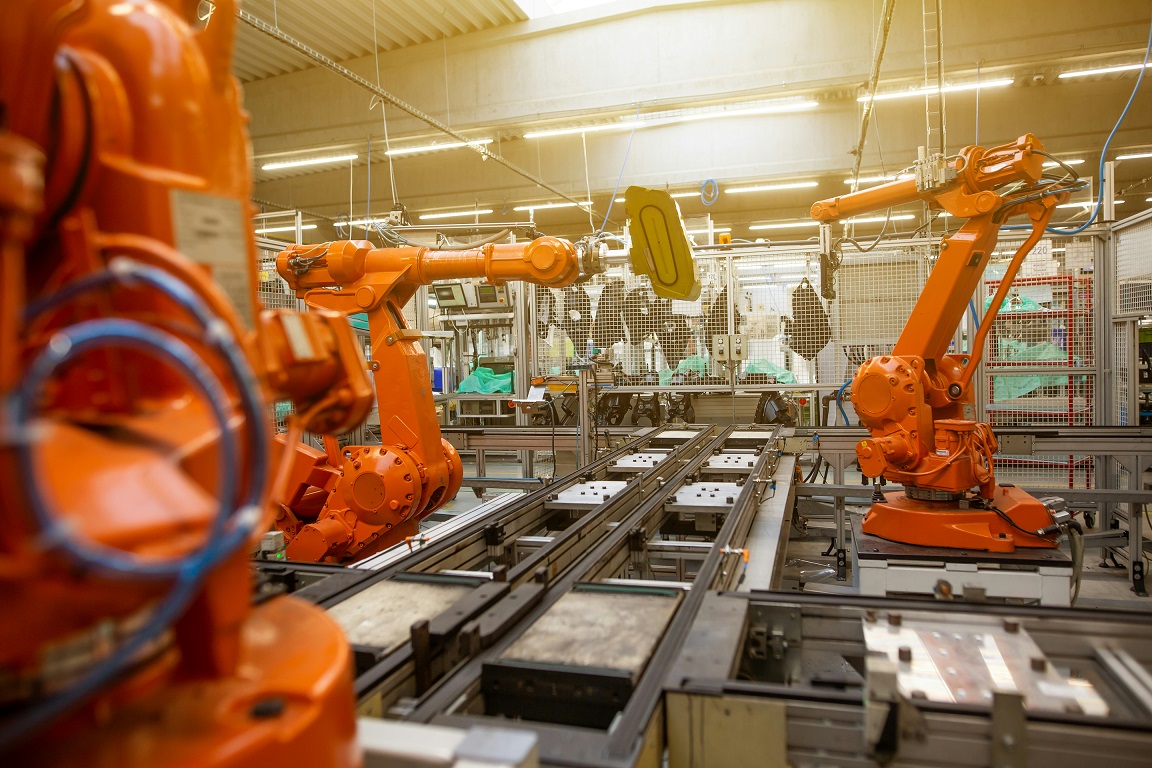
Photo by Simon Kadula / Unsplash.
Industrialization in Africa depends on turning resources, skills and technology into products that customers will buy repeatedly. Evidence from UNIDO points to opportunities in food processing, supplier development and cleaner production—and shows why reliable infrastructure and access to markets matter as much as new factories.
Africa’s manufacturing opportunity is substantial, but it is not a single market or a single development model. A food processor serving a nearby city, an exporter supplying an international buyer and a company considering an industrial park face different requirements for capital, infrastructure and skills.
The question for businesses is therefore specific: where can local production deliver a dependable product at a competitive total cost? Answering it requires looking beyond resource availability to customers, operating conditions and the supporting services that keep a production line running.
What the data say about manufacturing in Africa
According to UNIDO estimates published in the Africa factsheet accompanying the International Yearbook of Industrial Statistics 2025, Africa accounted for 2.0% of global manufacturing value added and 3.2% of global GDP in 2024. The continent’s manufacturing value added grew by an estimated 2.2% that year.
Manufacturing value added measures the value generated by manufacturing after deducting intermediate inputs; it is not the same as factories’ sales or merchandise exports. Keeping those measures separate is important when assessing claims about industrial growth.
The factsheet identifies food products, other non-metallic mineral products and beverages among the continent’s leading manufacturing industries by value added. It also describes differences between subregions. Continental totals are a starting point, not evidence that every country offers the same commercial opportunity.
A more recent UNIDO update on manufacturing production and trade in the second quarter of 2026 reports that manufacturing output increased by more than 1% compared with the previous quarter in all regions except Latin America and the Caribbean. This quarterly production measure differs from annual manufacturing value added. Short-term output growth, however, does not establish the profitability of a particular factory or the depth of its domestic supplier network.
What UNIDO’s new book contributes
The Future of Industrialization: Rethinking Economic Development, edited by UNIDO Director General Gerd Müller and published by Anthem Press, brings together perspectives on food systems, supply chains, clean energy, industrial decarbonization and artificial intelligence. UNIDO presented the book in New York on 21 September 2026.
The five priorities below are AfricaBusiness’s synthesis of those themes, separate UNIDO research and documented project examples. They are not an official five-point programme issued by UNIDO.
1. Build food-processing businesses around dependable supply and buyers
Agro-processing links farming with manufacturing through activities such as milling, drying, oil extraction, preservation and packaging. The commercial opportunity includes the services around a processor: collection, storage, equipment maintenance, testing and distribution.
Ethiopia illustrates the importance of connecting these activities. In an April 2026 account of three integrated agro-industrial parks, UNIDO reported that 126 investors had signed agreements and 29 were fully operational. It reported export revenues reaching US$54.9 million by the end of 2025.
The figures describe the parks covered by that account, not Ethiopia’s entire agro-processing industry. They also distinguish signed investment agreements from operating businesses. UNIDO describes collection centres and cooperatives supplying processors, including the SUNVADO avocado-processing facility at Yirgalem.
The business lesson is to test the whole supply arrangement. A plant may have modern equipment but still struggle if seasonal deliveries are unreliable, crop quality varies or buyers pay later than the processor must pay farmers.
A smaller-scale example comes from Grace & Co. Food Processing Enterprise in Sierra Leone. UNIDO’s March 2026 account describes support for a mechanized gari frying machine through the EU-funded West Africa Competitiveness Programme. The account reports improved capacity and reduced waste, but provides no quantified return on investment.
That distinction matters: the case demonstrates a targeted equipment upgrade, not a universal payback period. For another processor, the equivalent decision should start with its own bottleneck, sales orders and running costs.
2. Compete for a specific place in a value chain
Local value addition can involve processing a commodity, but it can also mean supplying packaging, components, repairs or quality-control services to an established producer. A smaller company does not need to own every stage of production to become commercially useful.
In an analysis published by the World Bank in November 2025, Woubet Kassa and Solomon Owusu emphasize productivity, links between firms and access to regional and global production networks. Their argument highlights the importance of supplier capabilities alongside investment in large producers.
UNIDO’s account of WACOMP’s 2018–2025 activities provides an example from Ghana: more than 500 market linkages were established, with participating SMEs expanding into 13 new markets. It also reports the development and adoption of 89 regional standards in sectors including cassava, mango and textiles.
These are programme-reported results. A market linkage is not necessarily a recurring purchase contract, and the summary does not establish the sales or margins earned by every participating firm.
For a prospective supplier, the practical questions are more demanding than whether a market exists. What specification does the buyer require? What volume will it purchase? Who pays for testing and rejected batches? How long must the supplier finance materials before receiving payment?
3. Evaluate cleaner production through delivered cost and reliability
Green industrialization can connect lower-emission energy with production, but renewable resource potential alone does not determine what a factory will pay for usable power. Reliability, connection costs, backup arrangements and maintenance also belong in the operating model.
Senegal offers a useful example of a proposal that should be assessed on those terms. A study described by UNIDO in 2026 identifies eight potential Green Energy Zone sites. It highlights Diamniadio, Sandiara and Diass for near-term investment, citing existing connections and transport access.
The same account says further institutional, regulatory and planning work is required before construction of pilot zones can begin. These are development proposals, not evidence that eight completed zones are already delivering lower production costs.
For an industrial tenant, an assessment should therefore establish which services are operational, which remain planned and who is responsible for delivery. An attractive future electricity price cannot compensate for a production schedule that depends on infrastructure without a confirmed completion date.
Existing manufacturers can apply the same discipline at plant level: identify an energy-intensive process, measure consumption per saleable unit, assess an improvement and compare results under similar production conditions. Emissions claims should identify the baseline and scope of measurement.
4. Introduce industrial AI where the operational problem is measurable
UNIDO’s AI and the Future of Industry: Challenges and Opportunities for Developing Countries discusses applications including predictive maintenance, visual quality inspection, inventory management and demand forecasting. It also identifies barriers involving infrastructure, skills, finance and data.
Those barriers suggest a selective approach. A manufacturer should be able to describe the failure it wants to reduce before choosing a tool: unplanned machine stops, defects, wasted materials or missed deliveries. A system that collects production data may be the necessary first step.
For a pilot, management should record the baseline, choose a limited deployment, assign a person responsible for exceptions and compare performance under comparable conditions. An improvement during a quieter production period should not automatically be attributed to AI.
Commercial evaluation should include integration, staff time, support and ongoing software costs. A reduction in defects has value only when its benefit is assessed against the cost of achieving and maintaining it. The relevant question is whether the application improves the operation, not whether the company can describe itself as AI-enabled.
5. Match skills and finance to the production cycle
A new factory needs people who can operate, maintain and improve its processes. Training is more useful when it addresses an identified production requirement and includes a way to assess competence on the job.
UNIDO’s Industrial Development Report 2026 takes an industrial-ecosystem perspective, connecting production with technology, capabilities and relationships across sectors. For businesses, that perspective directs attention to the services and institutions outside the factory gate.
A practical operating plan should distinguish money needed to acquire equipment from cash needed to run it. Raw materials, wages, utilities and transport may have to be paid before the customer settles an invoice. Growth can increase that funding gap even when orders are profitable on paper.
Similarly, a training programme should specify whether it addresses machine maintenance, production supervision, food safety, industrial data or another task. Counting trainees alone does not show whether a business can now meet a buyer’s requirements.
Manufacturing opportunities: questions to ask before committing resources
The following table is an editorial assessment framework, not a ranking of the most profitable sectors. The same activity can be viable in one location and uncompetitive in another.
| Activity | Potential business role | Evidence to obtain | Main exposure to test |
|---|---|---|---|
| Food processing | Process or preserve an available crop | Seasonal supply records, buyer specifications and realistic saleable yields | Underused capacity, spoilage and delayed payment |
| Packaging and industrial supplies | Serve existing producers as a qualified supplier | Purchase volumes, approval criteria and delivery requirements | Buyer concentration and rejected batches |
| Cold storage and logistics | Reduce interruptions between producer and buyer | Route volumes, utilization, energy costs and service responsibilities | Low utilization and equipment failure |
| Energy and maintenance services | Improve an existing plant’s operating performance | Metered consumption, failure records and maintenance history | Savings that disappear under normal operating conditions |
| Industrial digital services | Address a defined production or information problem | Data access, baseline performance and integration requirements | High deployment costs or unreliable outputs |
Why country and site selection matter
The examples cover different stages and scales: operating Ethiopian parks, an equipment upgrade in Sierra Leone, market-access support in Ghana and proposed energy zones in Senegal. They should not be treated as interchangeable evidence of a single African industrial model.
For any proposed location, examine the particular product, buyer and delivery route. Test the consequences of a slower sales ramp, a supply interruption and longer customer payment terms. Check whether profitability survives after including transport, rejected output and the cost of funding inventory.
A viable industrial proposition has to connect a customer willing to pay with a producer able to deliver consistently. UNIDO’s new book provides a broad framework for that discussion. Turning it into a business requires decisions at the level of a product, a production line and a dependable trading relationship.
Frequently asked questions
What is the difference between industrialization and manufacturing growth?
Manufacturing growth describes an increase in manufacturing activity or value added. Industrialization involves a broader transformation in productive capabilities, employment and links between firms and sectors. A rise in output alone does not establish that those wider changes have occurred.
Which opportunities can smaller African businesses explore?
The cases and framework above point to processing, packaging, maintenance, logistics and supplier services. Suitability depends on verified customer demand, technical requirements, operating costs and access to working capital; there is no universally best sector.
Does an industrial park guarantee a successful factory?
No. Shared infrastructure can address some constraints, but the business still needs buyers, reliable inputs, capable staff and sufficient operating cash. Signed investment agreements and functioning production facilities are different measures of progress.
Where can readers find UNIDO’s book?
The official UNIDO book page provides its scope and contributors. The Anthem Press catalogue page links to an open-access version and lists available formats.
Reporting note: This analysis draws on the book announcement, separate statistical and policy publications, and linked project accounts. Project results are attributed to the reporting organizations; AfricaBusiness has not independently audited them. Annual statistics, quarterly updates and project reports refer to different periods and measures. Sources checked on 4 October 2026.