


By AfricaBusiness.com Editorial Team
African manufacturers supplying covered goods to the European Union need to connect product information, production records and emissions evidence. The immediate task is to understand what the EU customer needs—and which records support it.
The European Union’s Carbon Border Adjustment Mechanism entered its definitive phase on 1 January 2026. For African exporters, the practical challenge is turning information held across purchasing, production, engineering and finance departments into a consistent record that an EU customer can use.
The authorised CBAM declarant handles the EU declaration and certificate obligations. However, a manufacturer outside the EU may need to supply installation information and verified emissions data if its customer intends to use actual emissions rather than the applicable default values.
A sustainability statement alone does not provide that evidence. Businesses need to identify the goods, the production installation, the relevant reporting period and the calculation method.
Establish whether the goods are covered
CBAM currently covers selected goods in six sectors: cement, iron and steel, aluminium, fertilisers, electricity and hydrogen.
Coverage depends on the Combined Nomenclature codes listed in Annex I of the CBAM Regulation. A broad description such as “metal products” is insufficient to determine whether a particular shipment falls within scope.
Exporters should agree the EU classification with their customer and obtain customs advice where it is uncertain. They should also identify the actual manufacturer when goods pass through a trader.
The annual 50-tonne mass-based exemption operates at importer level across the relevant covered goods. It is not a separate allowance for every overseas supplier or shipment. The exemption does not apply to electricity or hydrogen.
A supplier therefore cannot determine its customer’s position solely from the volume it sells to that customer.
Separate the 2026 data period from the 2027 deadlines
The timing matters for both record-keeping and commercial discussions.
The definitive regime applies to relevant imports from 1 January 2026. Certificate sales begin on 1 February 2027. The first annual declaration and certificate surrender, covering 2026 imports, are due by 30 September 2027.
That timetable gives businesses a reason to organise 2026 records now. Waiting until the declaration deadline may leave insufficient time to retrieve supplier information, correct inconsistencies and complete verification.
As a practical arrangement, the exporter and customer should agree their own earlier delivery dates for data, reviews and corrections. Those commercial deadlines should be distinguished from the statutory filing deadline.
Build a connected evidence pack
The documents required depend on the product, production route and calculation approach. A useful working pack should connect the following information.
Product and shipment records
Keep product descriptions, agreed CN classifications, quantities, origin information and references linking sales and shipment records to the goods concerned.
The aim is to prevent an emissions figure for one product or installation being applied to goods produced somewhere else.
Installation and production information
Identify the operator, manufacturing location, production processes and relevant reporting period. Retain production quantities and the basis used to allocate emissions between products.
A group-level sustainability report may provide useful context, but it does not necessarily identify the emissions associated with a particular installation and product.
Monitoring and calculation records
Maintain the monitoring plan, calculation files and underlying measurements required by the applicable methodology. Relevant evidence can include fuel records, meter readings, material balances and documented emission factors.
The calculation should follow CBAM’s system boundaries and sector rules. A general corporate carbon footprint or product environmental declaration should not automatically be treated as a substitute.
Precursor information
Some goods incorporate relevant inputs whose embedded emissions must be considered under the methodology.
Where actual precursor emissions are used, the supporting information may need to come from another installation. Purchasing teams should identify these dependencies early rather than expect the final manufacturer’s own records to answer every question.
Emissions report and verification
When using actual emissions, the operator must prepare the required emissions report and summary. Implementing Regulation (EU) 2025/2547 specifies their content and requires the operator’s report to be submitted in English.
Independent verification must be performed by a verifier with the appropriate CBAM accreditation. Hiring a consultant to prepare calculations is a separate service and does not, by itself, make those calculations verified.
The applicable rules also provide for a report summary that can be shared with declarants. Businesses should use the prescribed disclosure arrangements to manage commercially sensitive information.
Check the emissions rules for the particular sector
Energy consumption is important operational information, but CBAM does not treat every emissions category identically across all products.
Under the current rules, only direct emissions are taken into account for the goods listed in Annex II, including covered iron and steel, aluminium and hydrogen goods. Indirect emissions are relevant to other covered categories under their applicable rules.
Consequently, a renewable-electricity investment should not automatically be translated into a particular certificate saving. The result depends on which emissions the product’s CBAM calculation includes and whether the evidence meets the relevant conditions.
The European Commission’s sector guidance is a better starting point than a single emissions checklist applied indiscriminately to every industry.
Keep carbon-price evidence separate from general tax information
Where a reduction is claimed for a carbon price effectively paid in a third country, the supporting evidence must address the relevant embedded emissions and take account of available rebates or compensation.
A published national carbon-tax rate alone does not establish the deductible amount.
Exporters should preserve the relevant assessments, payment evidence and information about relief or compensation, and agree with the customer what additional certification is required. The declarant must establish that the claimed reduction satisfies the applicable rules.
For commercial budgeting, both parties should distinguish an indicative estimate from a completed certificate calculation.
The free-allocation adjustment is another important distinction. The 97.5% CBAM factor for 2026 does not mean that every producer simply multiplies its actual embedded emissions by 2.5%. Implementing Regulation (EU) 2025/2620 uses the applicable benchmark methodology and related parameters.
A costing spreadsheet should identify its assumptions, source versions and unresolved inputs.
A hypothetical example: a South African fastener manufacturer
Consider a South African manufacturer supplying covered steel fasteners to an EU customer. This is an illustration, not a reported company case.
The customer intends to use actual emissions data. The manufacturer therefore needs to establish which installation produced the goods and how the applicable calculation treats its production processes and relevant purchased steel inputs.
A file containing only electricity bills and a statement that the business uses renewable power would leave important questions unanswered.
The manufacturer’s practical sequence would be to confirm classification, identify required production and precursor records, prepare the prescribed calculation and report, and arrange verification.
It should also establish how the resulting product information will be matched to the customer’s imports.
This sequence does not establish a particular saving. Its purpose is to create a usable evidence trail before the customer completes its declaration and cost assessment.
Where Türkiye–Africa cooperation could help
Onur Nurel, President of the Eurasia Young Businesspeople Association (AVGİAD), Founder of Eurasiadesk and Publisher of Momentum Business e-Magazine, has proposed cooperation around technical training and support for African and Turkish SMEs adapting to European requirements.
Potential areas include helping manufacturers organise production records, improve monitoring practices and understand the information their customers request.
These remain proposed areas of cooperation. No implemented African exporter project demonstrating measurable results has been supplied for this feature.
Businesses considering such support should assess the provider’s relevant industrial experience, the deliverables offered and how the work connects to recognised verification.
A useful engagement should leave the manufacturer with an intelligible monitoring process, accessible supporting records and a clear allocation of responsibilities.
Routing a sale through an intermediary does not, by itself, resolve the need for information about the goods’ origin and production emissions.
Start with the next customer data request
An exporter’s first step is to identify covered products and ask its EU customer which calculation approach and information it intends to use.
From there, the business can assign responsibility for the evidence pack, identify missing upstream records and agree a realistic verification timetable.
The practical objective is a consistent connection between what was produced, how its emissions were calculated and what the customer declares.
Regulatory information reviewed on 1 November 2026. This article provides a general business overview; product classification, calculation and filing decisions require assessment against the applicable rules.
Related reading: Changes in Commodity Terms of Trade Across Selected African Economies, January–May 2026; Fuel Prices, Freight Costs and the New Test of Supply Chain Transparency.
Sources
European Commission: CBAM definitive regime
Regulation (EU) 2023/956: consolidated CBAM Regulation, including Annexes I and II
Regulation (EU) 2025/2083: amendments simplifying and strengthening CBAM
European Commission: Verification of CBAM emissions
Commission Implementing Regulation (EU) 2025/2620: free-allocation adjustment
European Commission: CBAM sector guidance
Organisation contact: Eurasia Young Businesspeople Association (AVGİAD): info@avgiad.org.
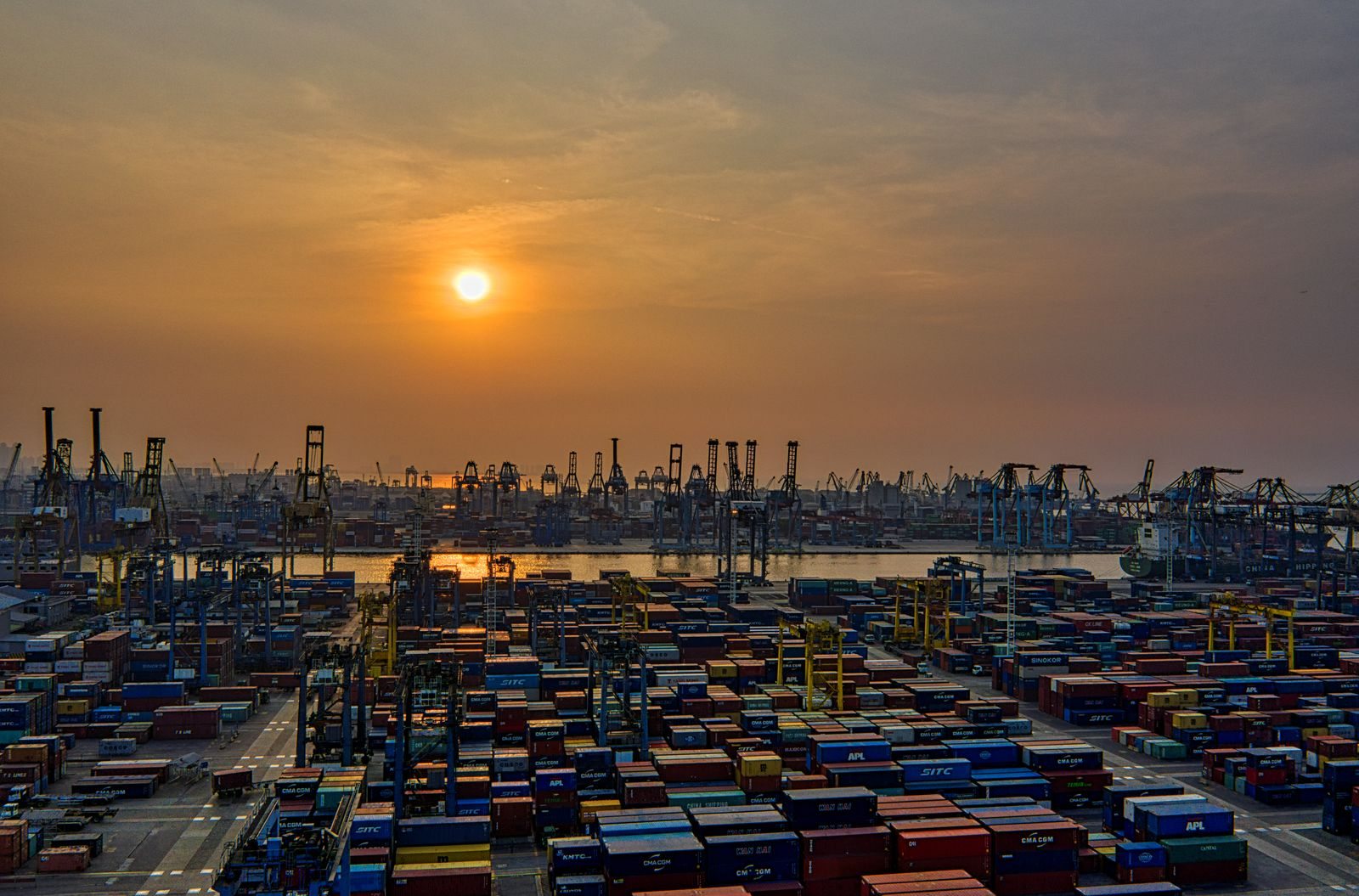
Illustrative photograph: Tom Fisk / Pexels. The image shows a seaport in Indonesia.